What is TCM Body Types:
In Traditional Chinese Medicine (TCM), “body types” (体质) describe your body’s overall tendencies—how you respond to stress, weather, food, sleep, and illness. It’s not a medical diagnosis, but a pattern-based way to understand your baseline strengths and weak spots so you can choose more personalized habits (diet, routine, movement) that keep you in balance.
Most people are a mix of types, with one or two that stand out most, and your type can shift over time with lifestyle changes.
If you are curious about your body type, you can test from HERE.
Table of Contents
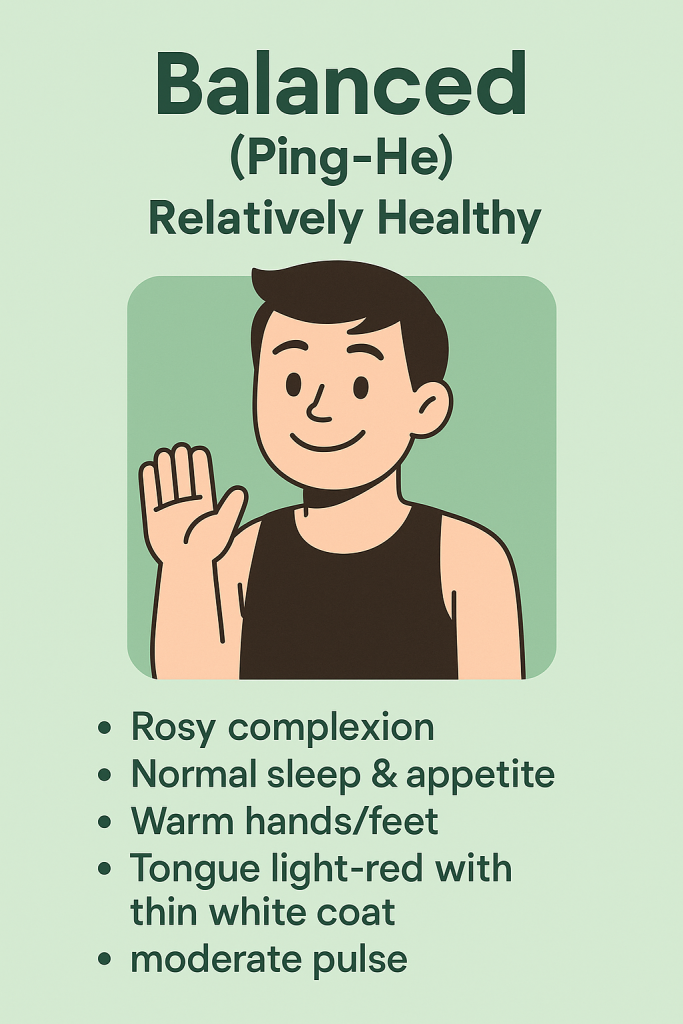
Balanced (Ping-He) — “Relatively Healthy” (平和体质)
How to spot: Rosy complexion, normal sleep and appetite, warm hands/feet, tongue light-red with thin white coat, moderate pulse.
Why it formed:
- Organs work in coordination (脏腑功能协调).
- Qi and blood are sufficient and flow smoothly (气血充足、运行通畅).
- Yin–yang stays stable with regular habits (阴阳平衡、起居有常).
Illness might happen to this body type:
- Usually fewer issues overall, but can still drift into sub-health / imbalance(亚健康) with stress, irregular sleep, overeating, or overwork
- Common “slip patterns”: mild digestive upset(脾胃不和), seasonal colds (外感), stress-related sleep disturbance (失眠)
Care focus: Follow natural rhythms, keep balance, prevent imbalance.
Routine: Regular sleep; avoid late nights; dress with the seasons.
Diet: Balanced grains/veg/fruit/protein; go light on sugars and heavy flavors.
Exercise: Moderate intensity 3–5×/week (brisk walk, swim, cycling).
Mood management: Social connection and hobbies; work–rest balance.
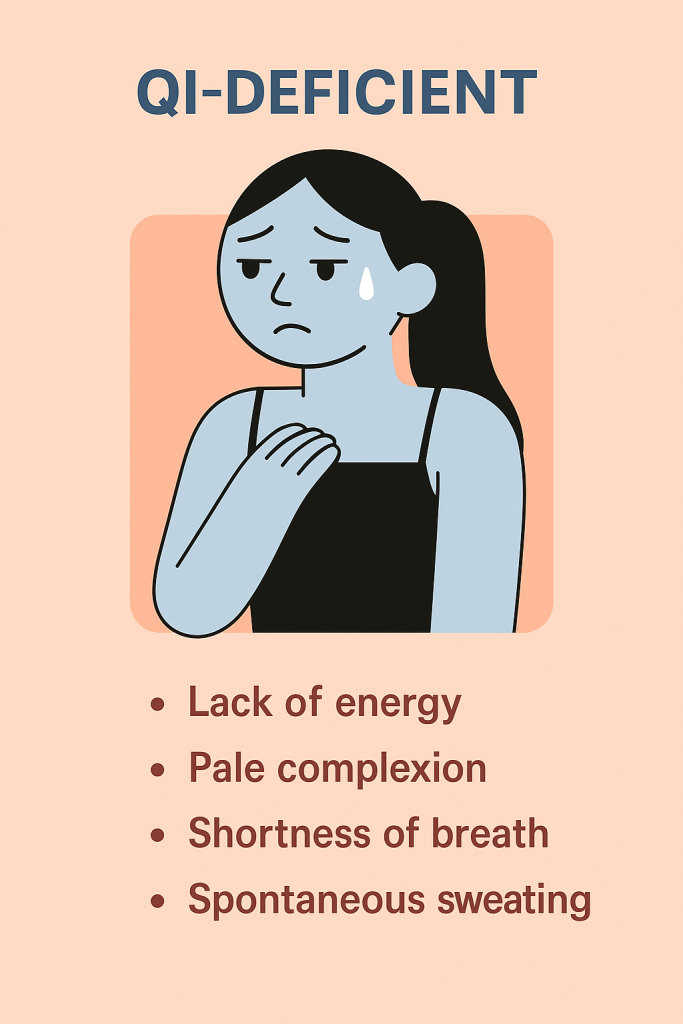
Qi-Deficient — “Easily Tired, Prone to Colds”(气虚体质)
How to spot: Low energy, shortness of breath on exertion, easy sweating, pale look; tongue pale with thin white coat; weak pulse.
Why it formed:
- Spleen qi is weak, so energy production is low (脾气虚、运化不足).
- Lung qi and defensive qi are weaker, so colds happen easily (肺气虚、卫气不足).
- Overwork, poor sleep, or long illness gradually drains qi (劳倦耗气、久病耗气).
Illness might happen to this body type:
- Frequent colds / lingering recovery (易感冒、恢复慢)
- Low appetite / loose stools (食欲差、便溏)
- Easy sweating and “catching chills” (自汗、易受风寒)
- Some people also notice mild edema / heaviness when very depleted (气虚水湿)
Care focus: Strengthen spleen (健脾) & boost qi (补气), gentle tonification (温补/平补)
Routine: Prioritize sleep; avoid overwork; keep warm all the time.
TCM recommended food: Chinese yam (山药), hyacinth bean (扁豆), brown rice (糙米), red dates (红枣); astragalus (黄芪)chicken/beef soup; avoid raw/icy foods (生冷).
Exercise: Low–moderate (walking, Baduanjin (one type of chi gong) 八段锦), build up gradually.
Mood management: Don’t overthink; set small goals to rebuild stamina.
Tea: Astragalus–codonopsis tea (黄芪+党参) (warm nature 温性)
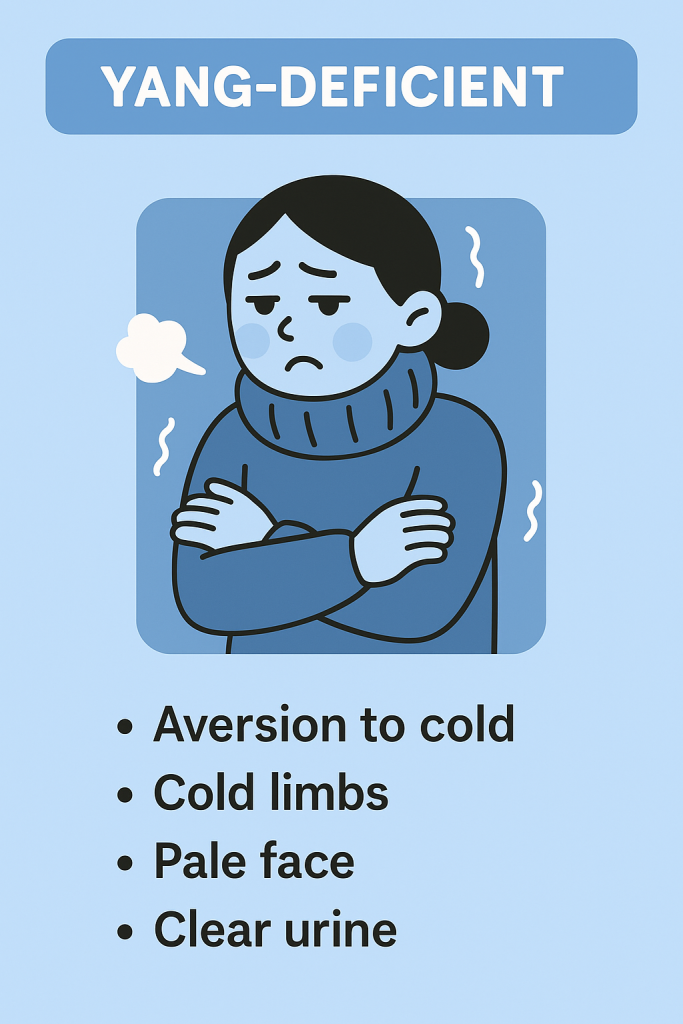
Yang-Deficient — “Feels Cold, Cold Hands/Feet” (阳虚体质)
How to spot: Aversion to cold, prefers warmth; sore/cold low back and knees; loose stools; pale, puffy tongue with white slippery coat; deep, weak pulse.
Why it formed:
- Kidney yang and/or spleen yang is weak (congenital or acquired 先天或后天), so warmth is insufficient (肾阳虚/脾阳虚).
- Cold exposure and too much raw/cold food further damages yang (寒邪内侵、嗜食生冷).
- Over time, the body “runs cold” and functions slow down (阳气不足、机能偏寒).
Illness might happen to this body type:
- Cold intolerance + chronic “cold-type” discomfort (畏寒、寒证)
- Loose stools / morning diarrhea tendencies (便溏、五更泄)
- Water retention / swelling tendency (阳虚水湿、浮肿)
- Low libido or fatigue-with-cold patterns for some (肾阳不足相关)
Care focus: Warm yang (温阳), dispel cold (祛寒); protect spleen & kidney (护脾肾)
Routine: Keep lower abdomen (小腹/丹田) and feet warm; avoid sitting on cold surfaces.
TCM recommended food: Lamb (羊肉), beef (牛肉), shrimp (虾), longan (龙眼肉), walnuts (核桃), old ginger (老姜), scallion (葱); limit cold fruits, raw foods, iced alcohol (忌生冷、冰饮).
Exercise: Gentle sweat-inducing (slow jog, brisk walk); avoid windy exposure while sweaty (汗出当避风).
Mood management: Early bedtime (before 11PM) supports yang recovery (早睡养阳).
Tea: Ginger–brown sugar tea (姜+红糖) (don’t use daily long-term)
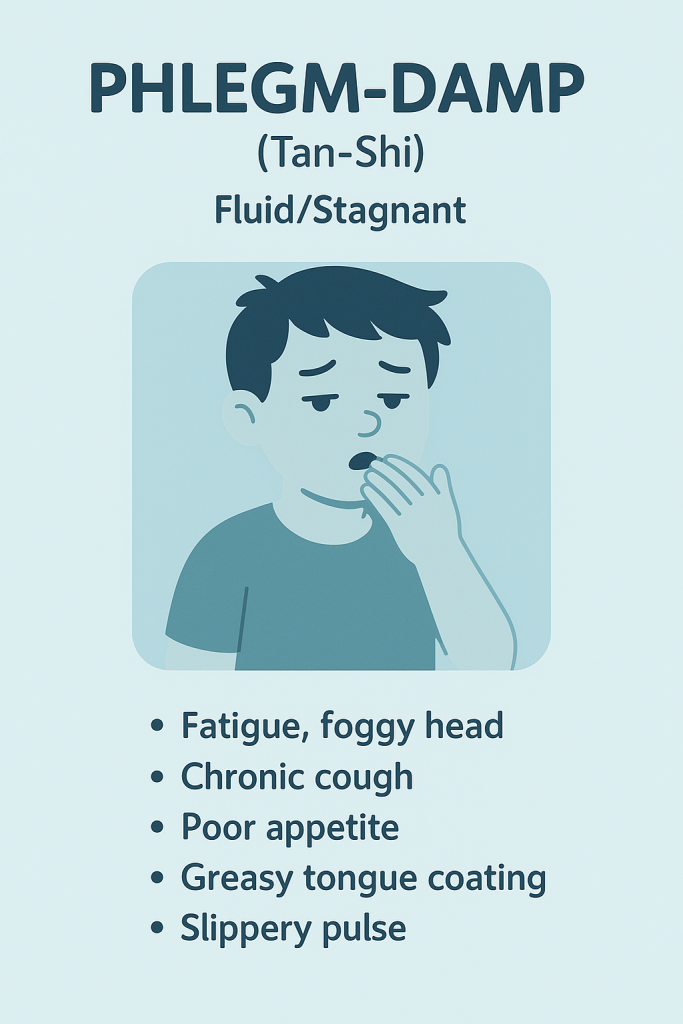
Phlegm-Damp — “Heavier Build, Groggy/Sticky Feeling” (痰湿体质)
How to spot: Chest stuffiness, much phlegm, oily face, overweight, heavy limbs, easily get tired, sticky mouthfeel; swollen tongue with white greasy coat.
Why it formed:
- The spleen is weak, so water metabolism slows and damp builds up (脾虚生湿).
- Damp lingers and condenses into phlegm over time (湿久成痰).
- Sweet/greasy diet, little movement, and humidity make it worse (甜腻厚味、久坐少动、久居潮湿).
Illness might happen to this body type:
- Weight gain tendency, sluggish metabolism feeling (易胖、困重)
- Phlegm/cough lingering, chest oppression (痰多、胸闷)
- Greasy skin, fatigue-after-eating, bloating (油腻、饭后困、胀)
- Higher tendency toward “damp-related” issues (sticky stools, foggy head) (湿困)
Care focus: Transform phlegm (化痰), drain damp (祛湿), strengthen spleen (健脾)
Routine: Early to bed/rise; ventilate rooms; dehumidify in rainy season (梅雨季).
TCM recommended food: Job’s tears/coix (薏苡仁), poria (茯苓), Chinese yam (山药), dried citrus peel (陈皮), winter melon (冬瓜), white radish (白萝卜); cut sweets, creamy/fried foods, late-night snacks, alcohol.
Exercise: Metabolism-boosting cardio + core strength.
Mood management: If desk-bound, stand/move 5–10 min each hour.
Tea: Aged pu-er (熟普/陈年普洱) with dried tangerine peel (陈皮); coix–adzuki tea (薏米+赤小豆)
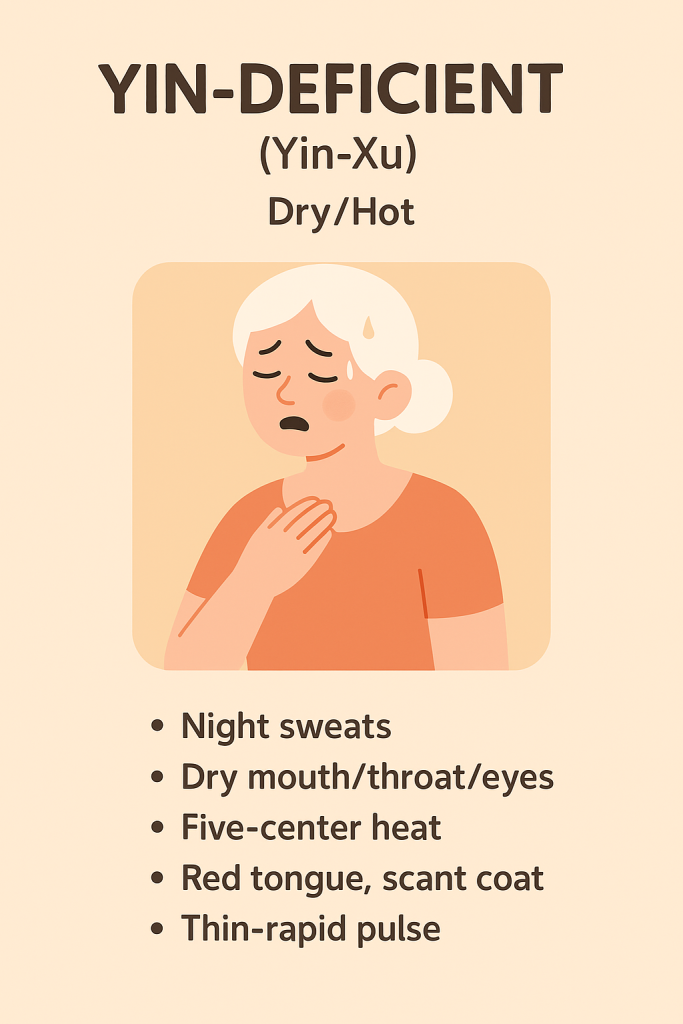
Yin-Deficient — “Dry Mouth/Throat, Warm Palms/Soles” (阴虚体质)
How to spot: Five-center heat (五心烦热:手心/脚心/胸口), dry mouth/throat, insomnia, dry stools; red tongue with scant coat; thin, rapid pulse.
Why it formed:
- Yin fluids are depleted, so cooling and moistening are insufficient (阴液不足、津液亏虚).
- Usually happens when aging, also late nights, stress, spicy foods, and alcohol tend to “burn yin” (熬夜劳心、辛辣酒炙耗阴).
- Deficiency heat appears when yin can’t anchor yang (阴虚则虚热).
Illness might happen to this body type:
- Dryness issues: dry throat/skin/eyes, constipation (燥、便秘)
- Sleep disturbance, vivid dreams, restlessness (虚烦失眠)
- “Heat signs” without true excess: mouth sores, flushed cheeks, night sweats (虚火、盗汗)
- Over time, can slide into stress-burnout patterns (阴液消耗)
Care focus: Nourish yin (滋阴), clear deficiency-heat (清虚热), replenish fluids (生津)
Routine: Avoid late nights and hot/dry environments; brief meditation to aid sleep.
TCM recommended food: Lily bulb (百合), tremella (银耳), adenophora (沙参), ophiopogon (麦冬), soy products (豆制品), black sesame (黑芝麻), pear (梨); avoid spicy, fried, barbecue, alcohol (辛辣、油炸、烧烤、酒).
Exercise: Gentle stretching (yoga, tai chi 太极拳); avoid prolonged high-heat workouts.
Mood management: Keep emotions steady; ease chronic tension.
Tea: Ophiopogon–dendrobium tea (麦冬+石斛)
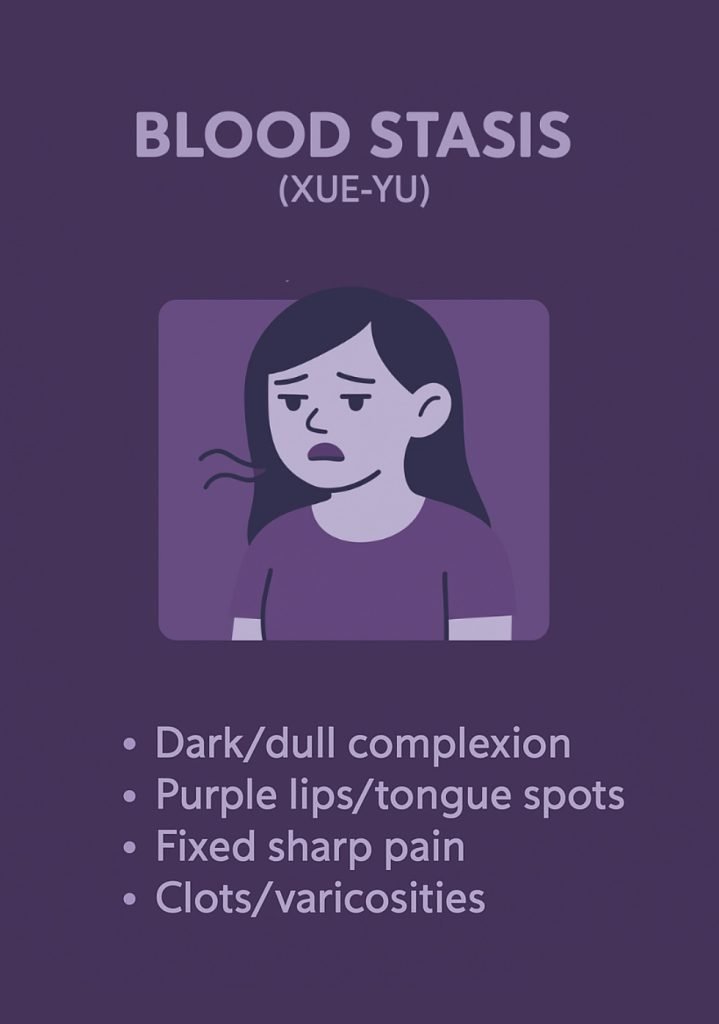
Blood-Stasis — “Fixed, Stabbing Pain; Dull Complexion; Easy Bruising” (血瘀体质)
How to spot: Fixed, stabbing pains; dark complexion; ecchymoses; purplish lips; dark tongue with stasis spots; choppy pulse.
Why it formed:
- Qi doesn’t move well, so blood circulation slows and stasis forms (气滞血瘀).
- Cold, old injuries, or chronic problems can “lock” blood in place (寒凝血瘀、瘀阻络脉).
- Over time this shows as fixed pain, dark tone, or easy bruising (痛有定处、色暗、易瘀).
Illness might happen to this body type:
- Fixed, recurring pain (often worse in cold) (痛有定处)
- Easy bruising, darker lips/under-eye tone (易瘀、色暗)
- Menstrual clots / painful periods for some (痛经、血块)
- Circulation-type discomfort: cold hands/feet, numbness/tingling tendency (瘀阻)
Care focus: Invigorate blood (活血), dispel stasis (化瘀), warm and open channels (温通经络)
Routine: Break up long sitting/standing; warm foot soaks for circulation.
TCM recommended food: Hawthorn (山楂), salvia root / danshen (丹参), black fungus / wood ear (木耳), onion (洋葱), turmeric (姜黄); limit tobacco, alcohol, high-fat foods.
Exercise: Cardio + flexibility; avoid long stillness in cold/damp places.
Mood management: Open chest and limbs; pair with deep breathing.
Tea: Hawthorn–red date tea (山楂+红枣)
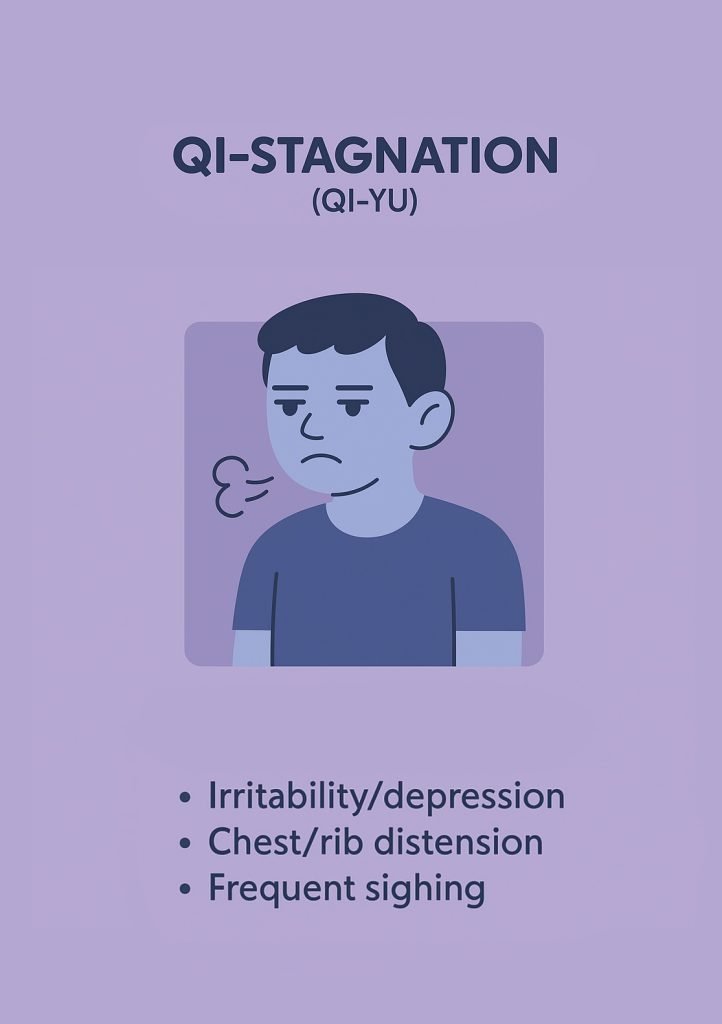
Qi-Stagnation — “Low Mood, Chest/Flank Distension” (气郁体质)
How to spot: Frequent sighing, chest/flank tightness, globus sensation in throat; poor sleep; tongue pale or slightly red with thin coat; wiry pulse.
Why it formed:
- Emotional constraint blocks liver qi movement (情志不畅、肝气郁结).
- Stress plus inactivity makes qi circulate even more poorly (压力大、气机不畅).
- Overthinking and irregular routines disrupt the spleen and worsen stagnation (思虑过度、起居失常).
Illness might happen to this body type:
- Mood dips, anxiety, irritability cycles (情绪波动)
- Chest tightness, sighing, throat “lump” sensation (胸闷、梅核气)
- PMS-related discomfort, breast tenderness for some (经前不适)
- Stress-related digestive changes: bloating, alternating stool patterns (肝郁犯脾)
Care focus: Soothe liver (疏肝), move qi (理气)
Routine: Daily daylight and outdoor time; healthy outlets for emotions.
TCM recommended food: Rose (玫瑰花), bergamot peel / fo shou (佛手), dried tangerine peel (陈皮), preserved plum (话梅); xiangfu (香附) tea at food-therapy strength; limit excess caffeine and alcohol.
Exercise: Rhythmic movement (brisk walk, easy run, dance) + breathwork.
Mood management: Emotion journal/meditation; seek counseling if needed.
Tea: Rose–mint tea (玫瑰花+薄荷)
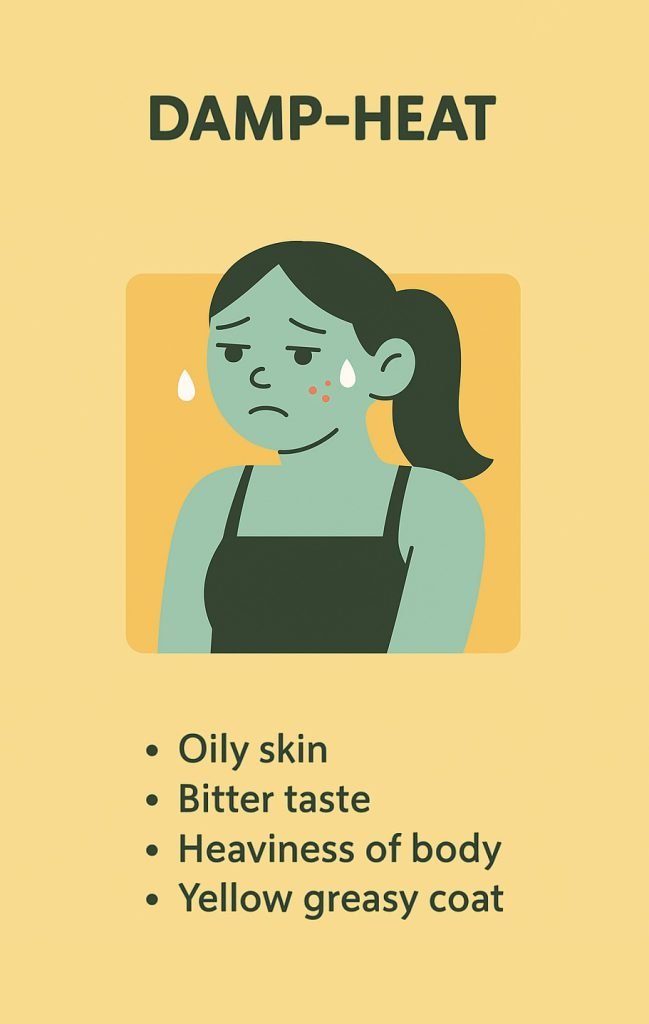
Damp-Heat — “Oily Skin, Bitter/Sticky Taste, Breakouts” (湿热体质)
How to spot: Bitter mouth, thirst, stronger body odor/sweat, sticky stools, dark urine; red tongue with yellow greasy coat.
Why it formed:
- Damp accumulates first, then turns into heat and becomes damp-heat (湿久化热、湿热内蕴).
- Rich foods, alcohol, and spicy meals feed this pattern (膏粱厚味、嗜酒辛辣).
- Stress and late nights can add liver heat and flare symptoms (肝胆郁热、熬夜生热).
Illness might happen to this body type:
- Skin issues: acne, eczema flare tendency, itching (痘、湿疹、瘙痒)
- Digestive “hot-damp” signs: reflux, smelly gas/stool, sticky bowel movements (口苦、便黏)
- Stronger odor/sweat, irritability, heat sensations (味重、烦躁)
- Some people get urinary discomfort during flare-ups (湿热下注)
Care focus: Clear heat (清热), drain damp (利湿), soothe liver qi (疏肝理气)
Routine: Avoid all-nighters and heavy sun; skip saunas and spicy/alcohol binges.
TCM recommended food: Mung beans (绿豆), coix (薏苡仁), bitter melon (苦瓜), lotus plumule (莲子心), lotus root (莲藕); small amounts aloe juice (芦荟汁,少量); avoid barbecue, heavy flavors, sugary drinks.
Exercise: Moderate intensity; dry sweat promptly and rehydrate.
Mood management: Manage stress to prevent “emotional fire” (情绪化火).
Tea: Honeysuckle–chrysanthemum tea (金银花+菊花)
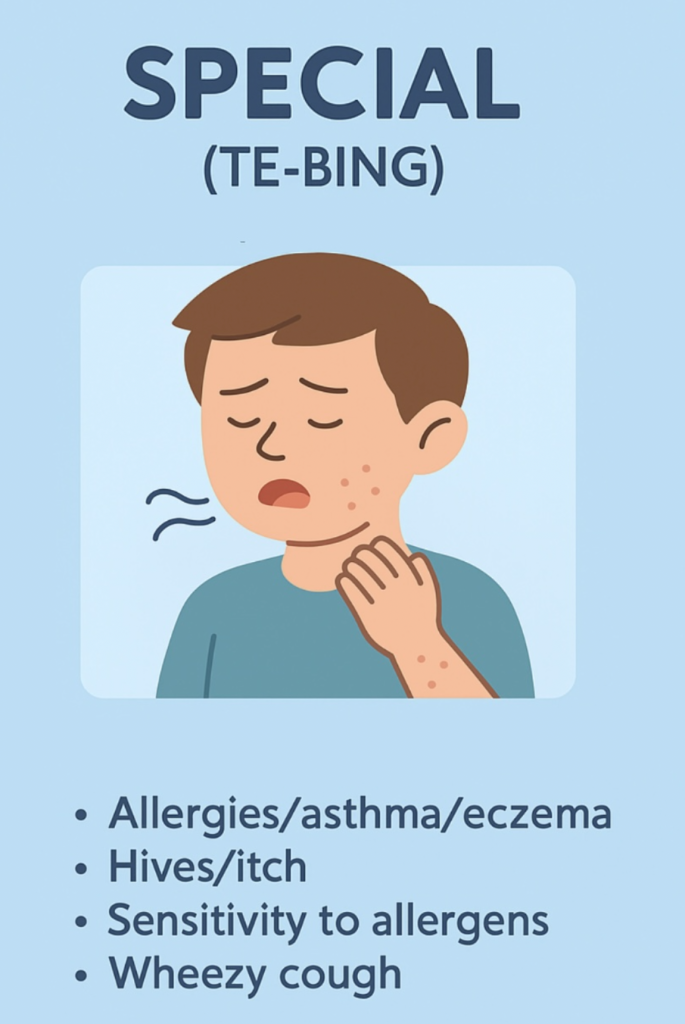
Special/Atopic (Te-Bing) — “Allergy-Prone / Constitutional Variants” (特秉体质)
How to spot: Easy allergies to pollen/seafood/dust mites, etc., or congenital traits.
Why it formed:
- This is often an inborn sensitive constitution (先天禀赋特异).
- Defensive qi is relatively weak, so triggers provoke reactions easily (卫气不足、易受诱发).
- Lung and spleen weakness commonly sits underneath the allergy tendency (肺脾两虚)
Illness might happen to this body type:
- Allergic rhinitis, hives, eczema-type flares (过敏性鼻炎、荨麻疹、湿疹)
- Asthma-like wheeze/cough tendency in some (哮喘倾向)
- Strong reactions to foods/environment during seasonal peaks (季节性发作)
- Sensitive skin and “reactive” constitution patterns (体质敏感)
Care focus: Avoid triggers; fortify exterior (固表); support baseline.
Routine: Reduce dust/mite exposure; be cautious with seasonal exposure.
TCM recommended food: After identifying triggers, avoid strictly; daily support with Chinese yam (山药), astragalus (黄芪), red dates (红枣); be cautious with seafood/alcohol based on your case.
Exercise: Gentle conditioning; during flare-ups, reduce intense outdoor activity.
Mood management: Keep emotions steady—anxiety can trigger episodes.
Tea: Astragalus–saposhnikovia tea (黄芪+防风) (limit if you run hot 上火)
May everyone be healthy!
Brenda Zhao